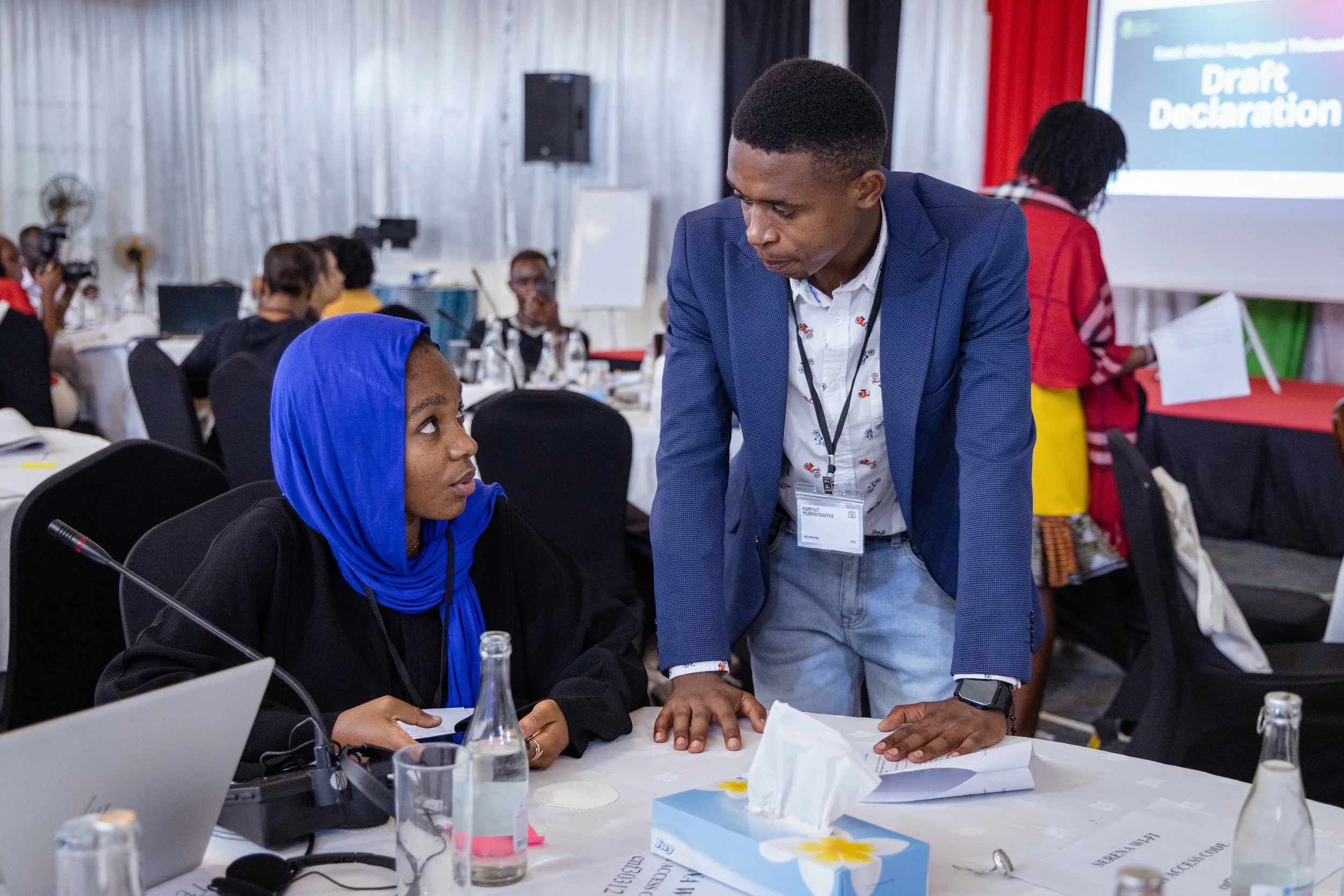
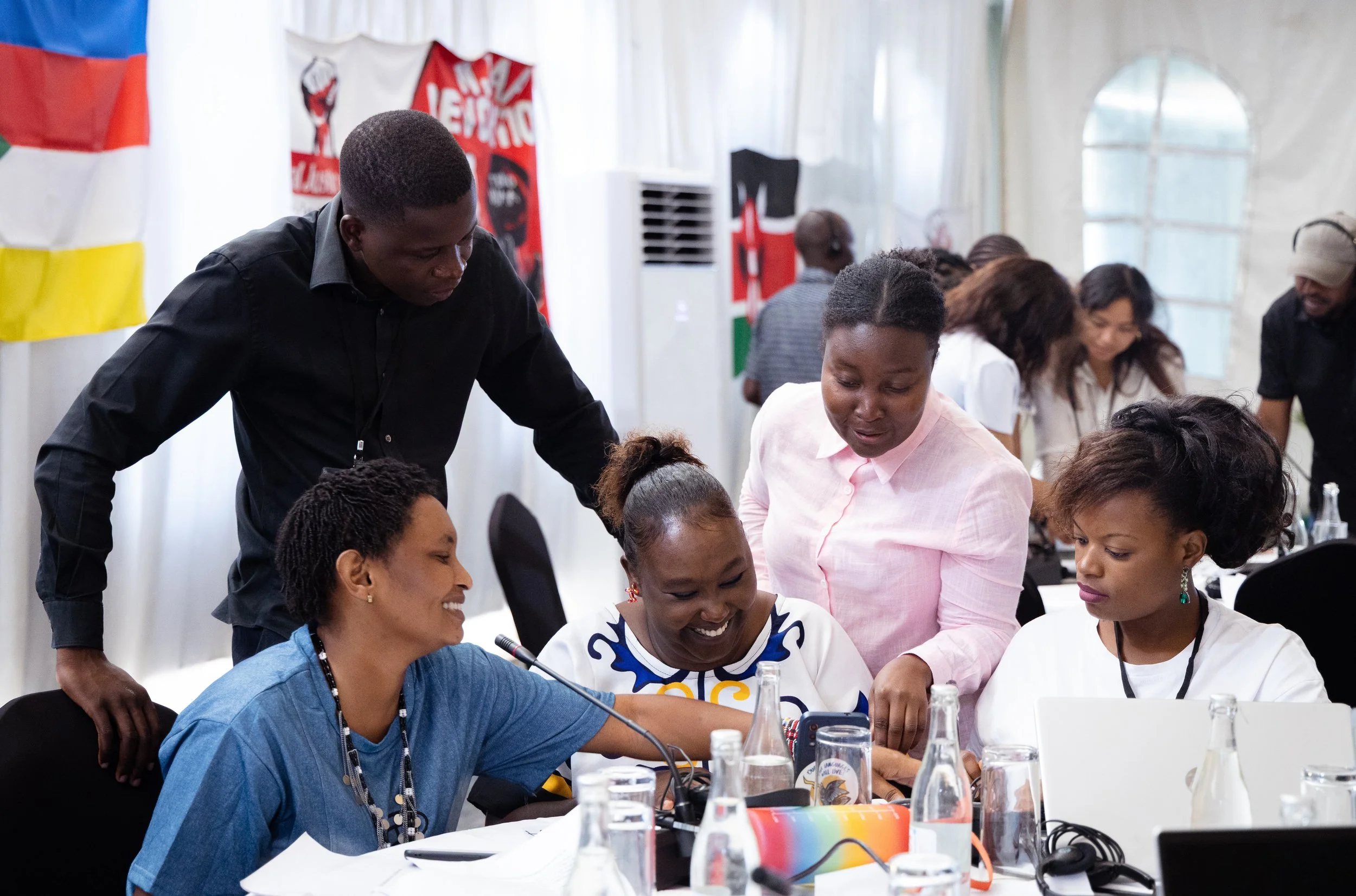
“ We define future generations as a collective entity of those who do not yet exist and whose identities are not yet foreseeable, yet whose inherent diversity (across genders, ethnicities, minorities, and creeds) is already implied within the continuity of life ”
The East Africa Declaration on the Rights of Future Generations is a collective articulation of responsibility across time.
The Declaration emerged from the Tribunal through testimony, regional expertise, and legal analysis, and was shaped through a shared process of listening, debate, and care.
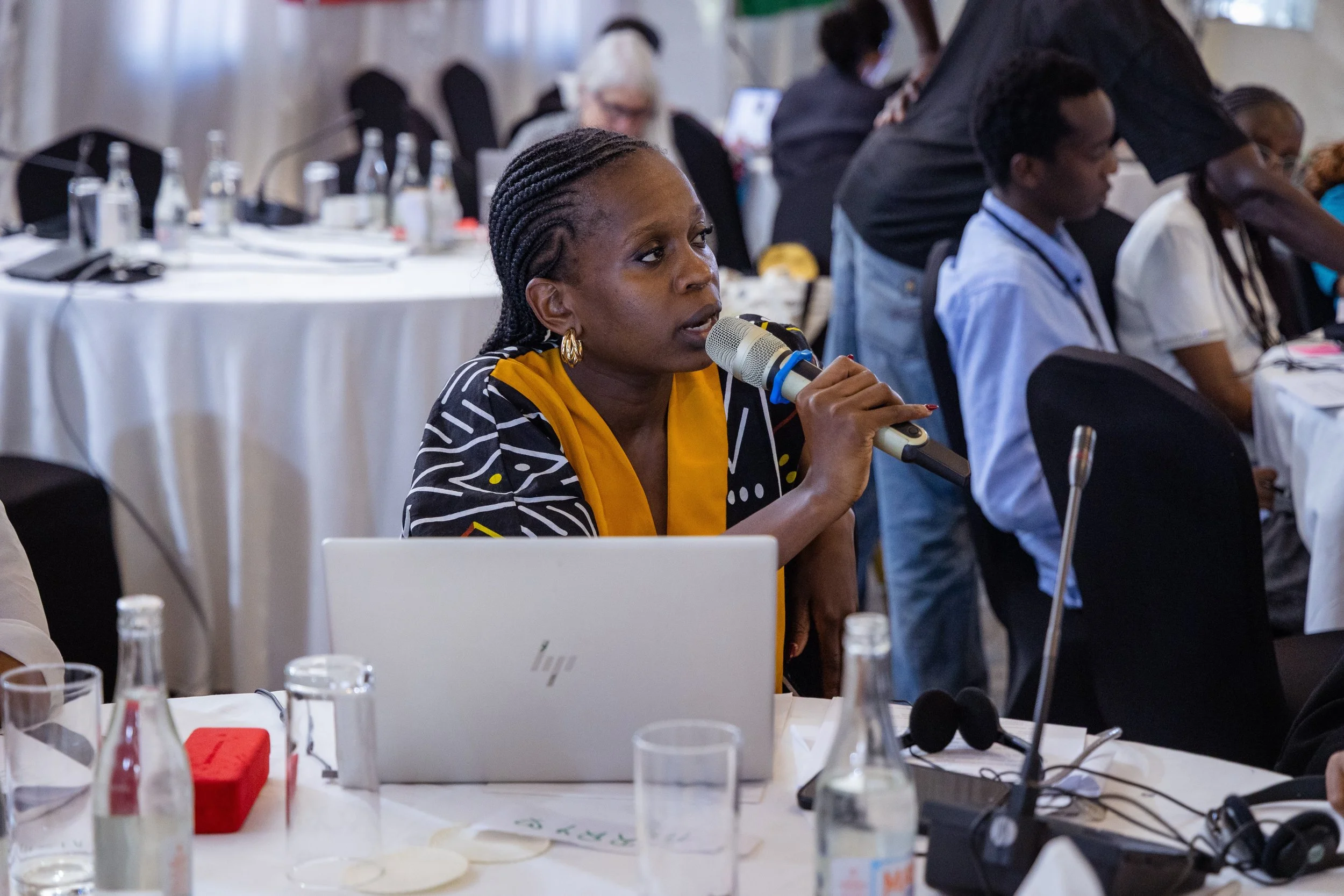
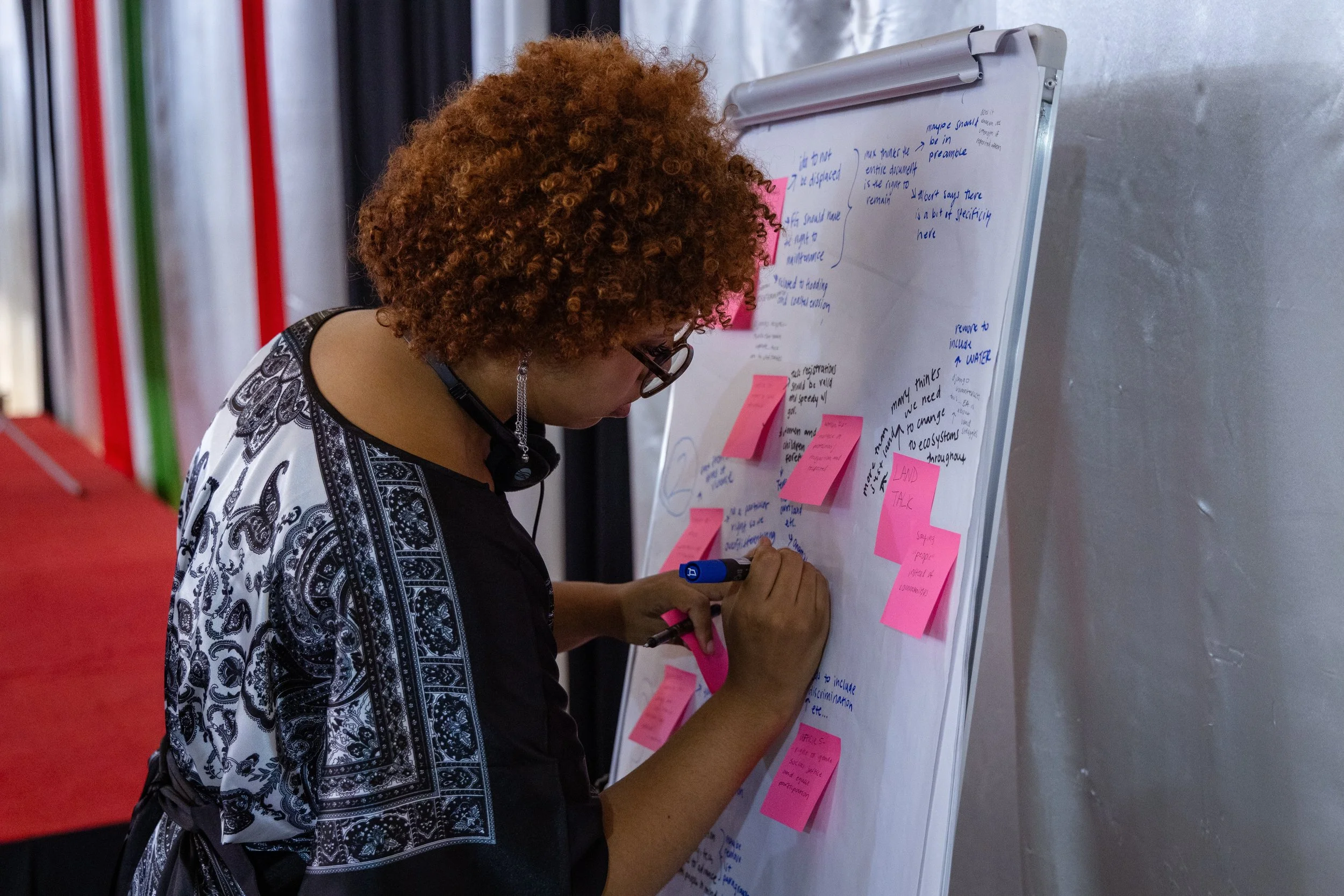
Over the final days of the Tribunal, participants engaged in collective workshopping, line by line review, and open feedback, refining the language together and grounding it in lived experience. Through discussion, revision, and collective decision making, the Declaration was affirmed not by a single author, but through shared agreement and responsibility.
Rooted in East Africa’s histories, ecosystems, and struggles, the Declaration affirms that future generations are not abstract beneficiaries, but present rights holders. It recognizes youth and young people today as both inheritors of these rights and active decision makers responsible for carrying them forward. By securing rights for the future, the Declaration also affirms their inherent existence in the present, translating lived experience into durable language that can travel across movements, institutions, and legal systems.

Think of this as the highlight reel.
The full Declaration lays out the rest.
Read the Full Declaration
-
Future generations have the right to shape their own social, cultural, economic, and political futures. Decisions made today must protect the freedom of communities and future peoples to determine their own paths with dignity.
-
No generation should bear avoidable harm caused by neglect, greed, or failure to act. States and decision-makers have a duty to foresee, prevent, and reduce long-term and cumulative environmental and climate harms.
-
Future generations are entitled to equality, dignity, and full participation in decision-making. This includes protecting women, girls, persons with disabilities, youth, and marginalized groups from disproportionate burdens caused by environmental and social crises.
-
Future generations have the right to inherit, practice, and pass on culture, language, rituals, and collective memory. Cultural continuity and community belonging are essential to dignity, resilience, and justice across generations.
-
Future generations have the right to benefit from technology that is safe, accessible, and equitable. Harmful, extractive, or untested technologies that threaten people, ecosystems, or rights must be prevented and regulated.
-
Every generation has the right to live within a clean, healthy, and balanced environment. Protecting ecosystems, biodiversity, air, water, and climate stability is essential to sustaining life and intergenerational justice.
-
Future generations have the right to remain on and maintain relationships with their ancestral and ecological homelands. This includes safeguarding land, culture, identity, and the ability to adapt in place with dignity.
-
When remaining on ancestral lands becomes impossible, future generations have the right to resettlement that is safe, dignified, and culturally appropriate. They also retain the right to return once lands and ecosystems are restored.
-
Future generations have the right to live free from violence, including conflict fueled by environmental destruction and climate instability. Peace, justice, and ecological protection are inseparable conditions for a viable future.
-
Future generations are entitled to access information, participate in decision-making, and be represented in governance. Children and youth today must be meaningfully included, as they carry the closest interests of generations yet to come.
Our Community Defined Rights
“ And so this Declaration stands as a covenant between our ancestors, the Living, and the yet-to-come. A commitment that every generation, present and future, may live in dignity, safety, and harmony with the Earth that sustains us. ”
Meet Our Thematic Experts
𖦹
Meet Our Thematic Experts 𖦹
Meet Our Thematic Experts
𖦹
Meet Our Thematic Experts 𖦹
-
![]()
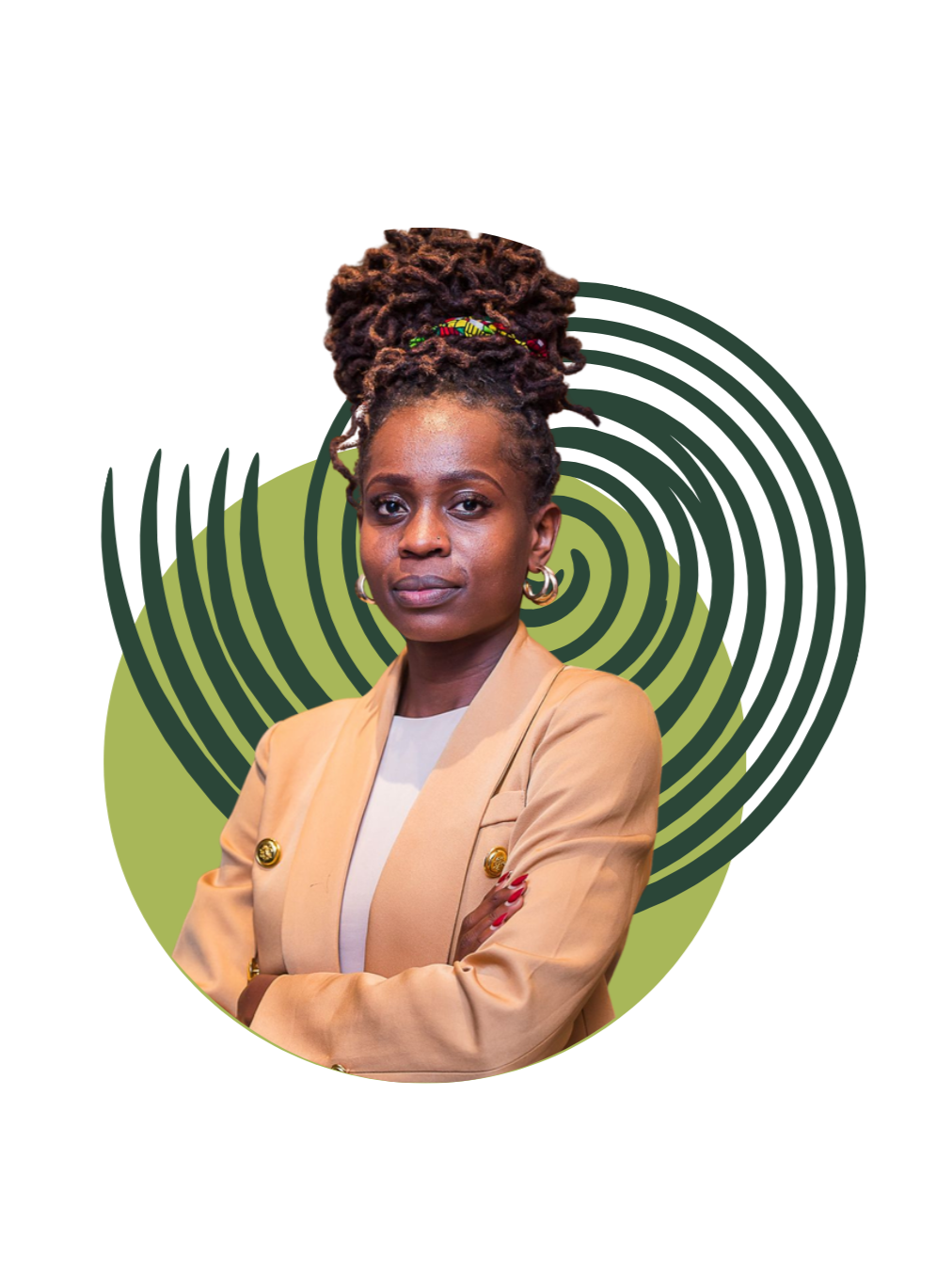
Terry Owino
WOMEN’S RIGHTS
Kenya
Terry Owino is a youth climate justice advocate and systems thinker focused on gender inclusive climate policy and just transition. Through her feminist storytelling platform, Realities of Unstoppable Humans, her work centers marginalized voices, particularly women in urban informal settlements, challenging dominant narratives and power structures within climate decision making. -
![]()
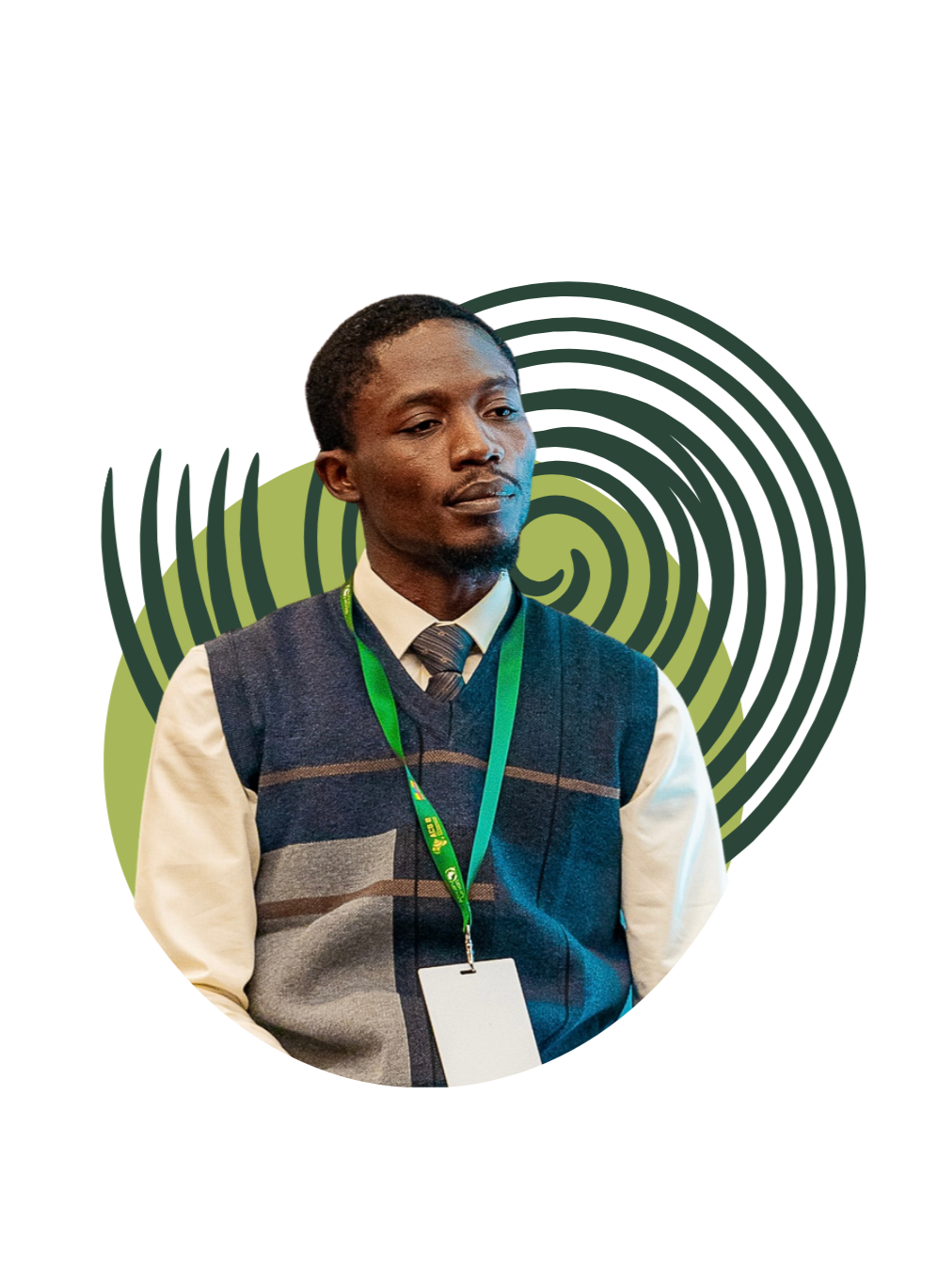
Michael Kakande
AFRICAN COURT DECLARATION DRAFTING
Uganda
Michael Kakande is the Founder and Chairperson of Resilient40, a pan-African youth-led network advancing climate resilience, economic justice, and sustainable development. His work positions African youth as critical actors in national, regional, and global climate decision making, bridging grassroots realities with international climate negotiations. He has also co-led a request for an advisory opinion from the African Court on Human and Peoples’ Rights on state obligations in response to climate change. -
![]()
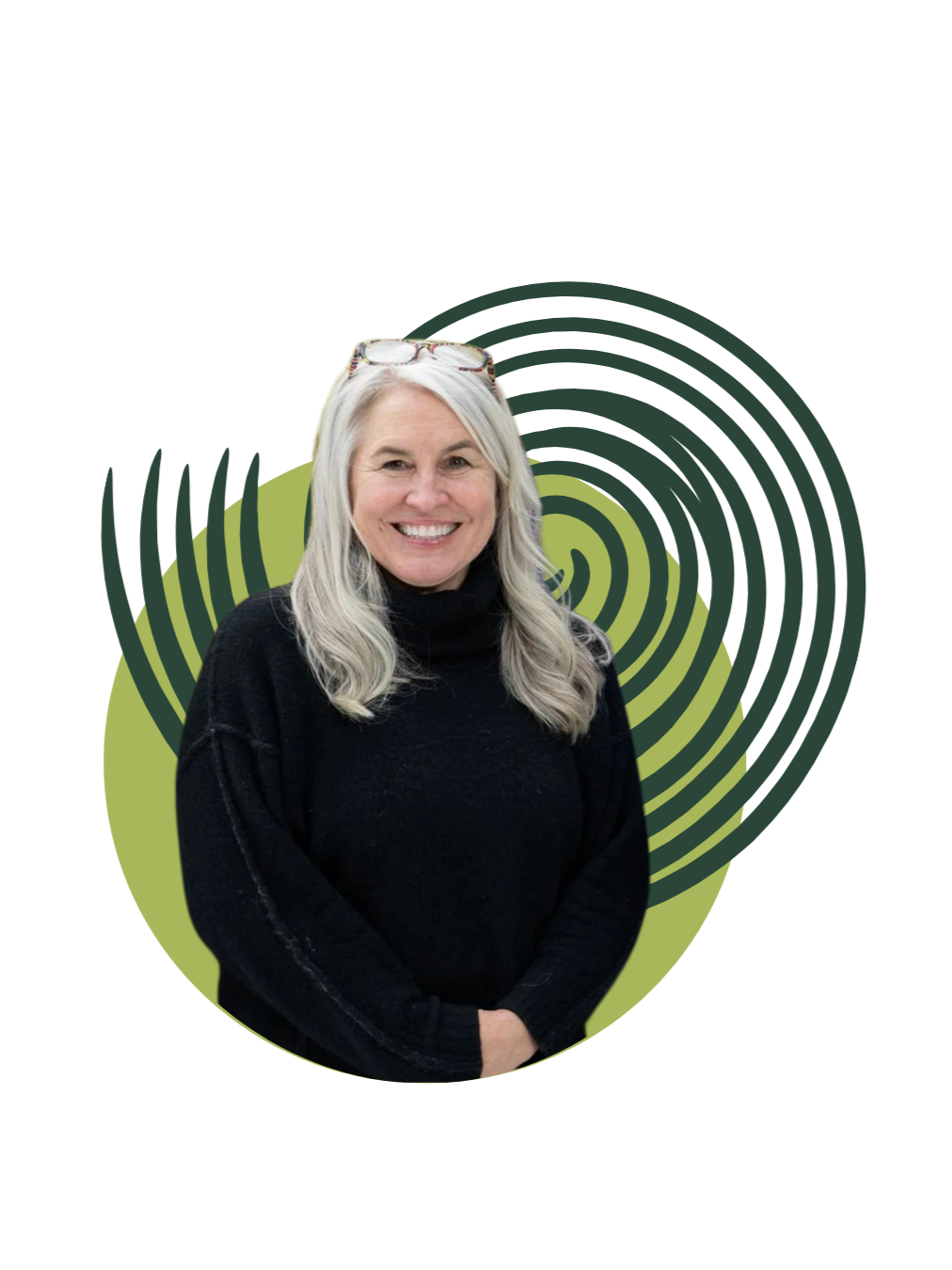
Kelly Matheson
RIGHT TO A HEALTHY ENVIRONMENT
United States / Netherlands
Kelly Matheson is a human rights lawyer with over two decades of experience working at the intersection of environmental protection and human rights. She leads global work at Our Children’s Trust and has supported youth-led climate litigation and storytelling efforts across regions, including East Africa and the United States. -
![]()
Ojango Omondi Mc’Apondi
ECONOMIC, SOCIAL, CULTURAL RIGHTS
Kenya
Ojango Omondi Mc’Apondi is a community organizer and political social justice activist with over a decade of experience advancing socio-economic rights and ecological justice in Kenya. He organizes through the Social Justice Centers Working Group, focusing on political education, food sovereignty, and environmental justice to build collective power and defend the rights and dignity of present and future generations. -
![]()
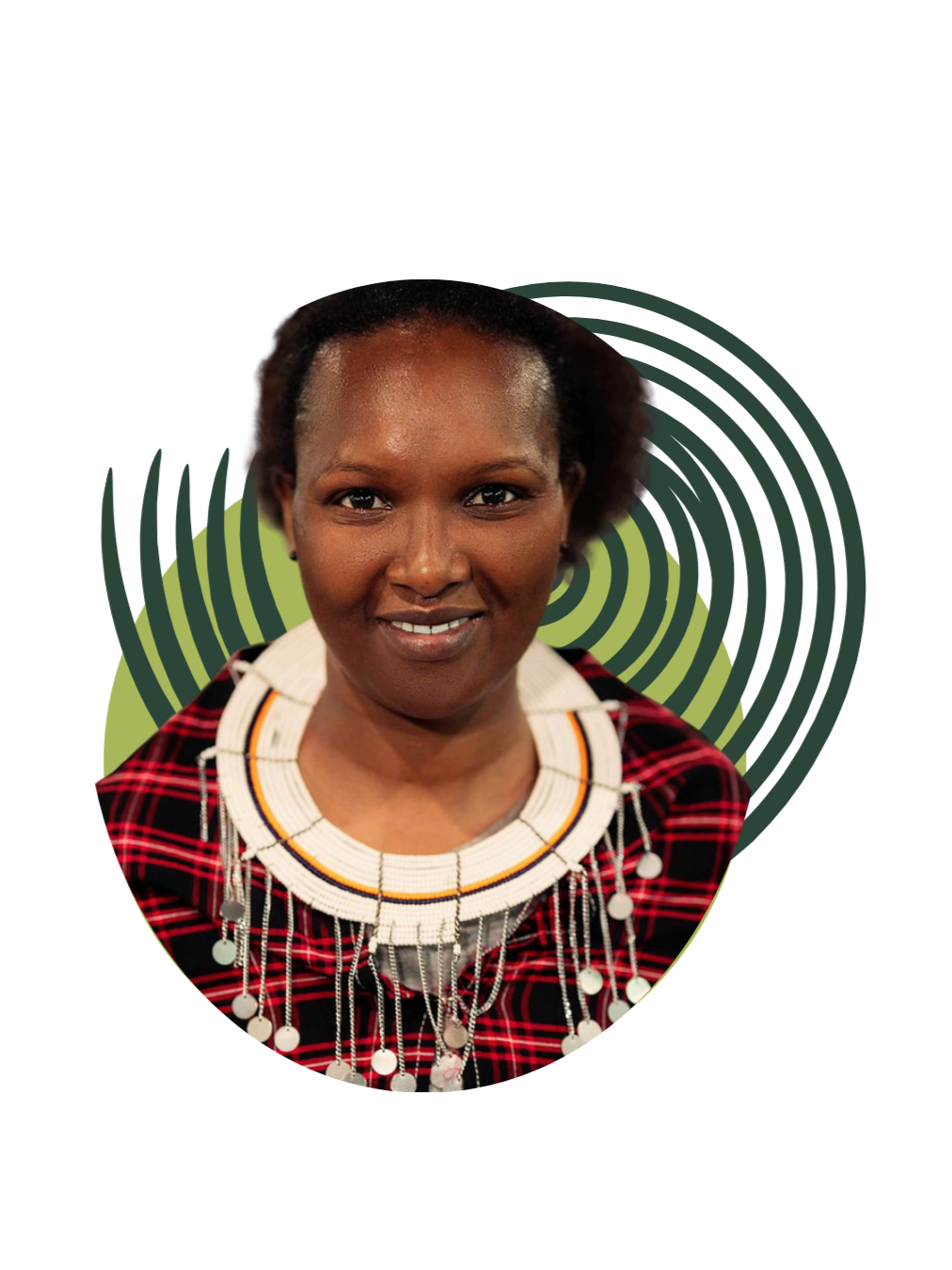
Naserian Kirrokor
INDIGENOUS AND CHILDREN’S RIGHTS
Kenya
Naserian Kirrokor is an advocate for nomadic children and the founder of The Nomad Child Foundation. Her work translates the impacts of climate change into concrete children’s rights realities, advancing community led solutions that strengthen resilience, protect access to education, and safeguard the rights of future generations.
-
![]()
Balach Bakundane
CIVIL AND POLITICAL RIGHTS
Kenya
Balach Bakundane is a Community Organizer, Human and Environmental Rights Defender with the #StopEACOP Campaign. He is committed to resisting the destructive EACOP oil project and its threats to community livelihoods, climate justice, human rights, and environmental integrity.
-
![]()
Damalie Nakajjugo
PSYCHOLOGICAL HEALTH
Uganda
Damalie Nakajjugo is an environmentalist and climate advocate working with Resilient40. She is dedicated to promoting sustainable practices and advancing climate justice through grassroots education and advocacy, with a focus on uplifting women and centering children, especially those most marginalized.