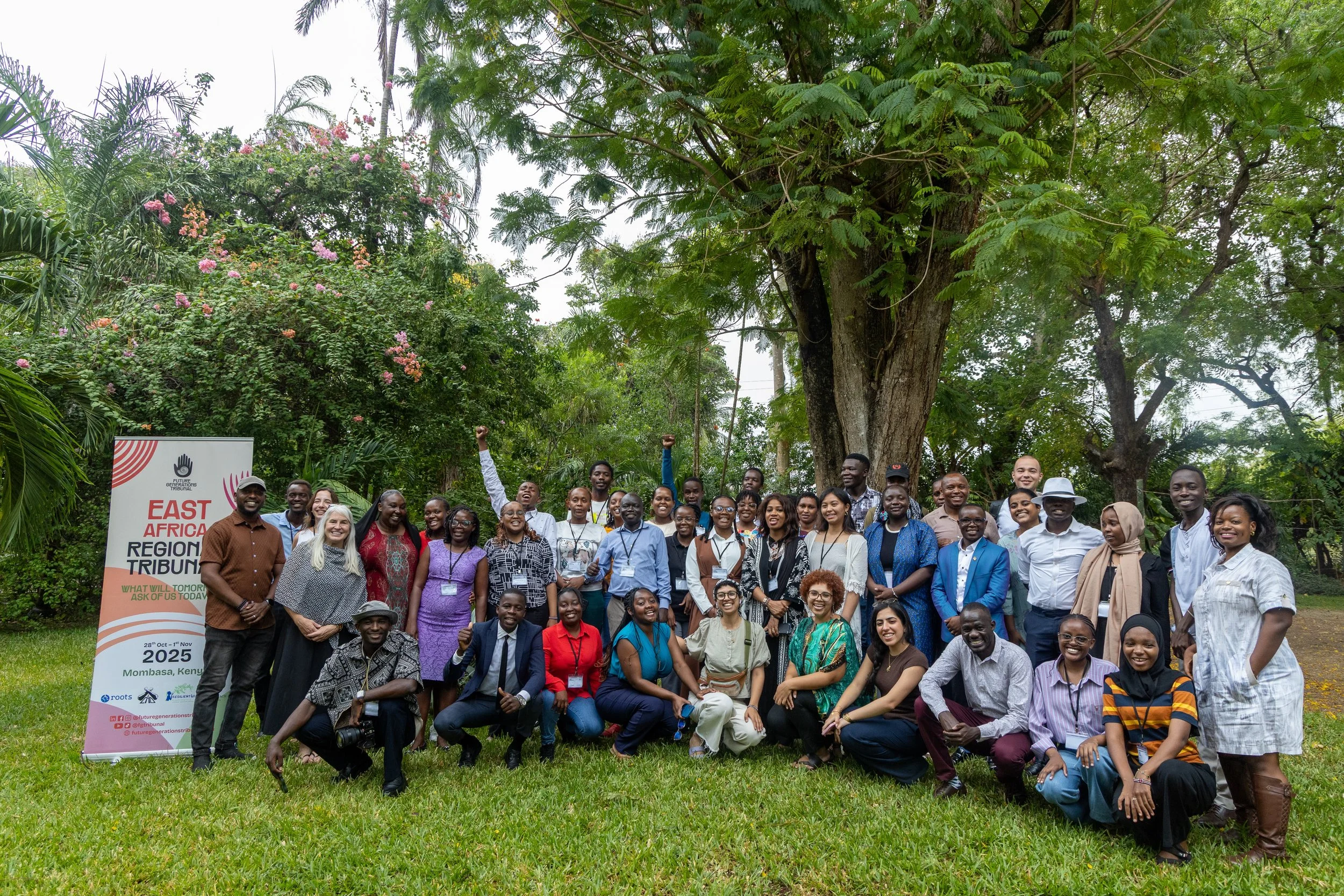
East Africa Future Generations Tribunal

The East Africa Future Generations Tribunal marked the first regional tribunal of the Future Generations Tribunal, gathering youth and frontline communities in Mombasa, Kenya to reflect on how the climate crisis is shaping their lives, futures, and rights. Designed as a participatory and youth-led process, the Tribunal honored lived experience as both knowledge and evidence, grounding questions of justice, accountability, and intergenerational responsibility in the realities of the present.
Mombasa, Kenya was intentionally chosen as a place where land, sea, and memory meet. A coastal city shaped by ecological change, conservation and community stewardship, and enduring legacies of extraction and enslavement, it holds the weight of history alongside urgent calls for repair and renewal. Within this context, the Tribunal created space for testimony, collective learning, and the co-design of pathways for action responsive to regional realities.
What emerged in Mombasa did not begin there, nor does it end there. Held through collaboration, care, and shared responsibility, the Tribunal connected generations, geographies, and forms of knowledge, carrying lived experience forward into ongoing struggles for justice, repair, and accountability across the region. In doing so, it affirmed that the work of protecting future generations is not a single moment or document, but a continuing commitment shaped by place, memory, and collective action.

Snapshot of our Impact
Snapshot of our Impact
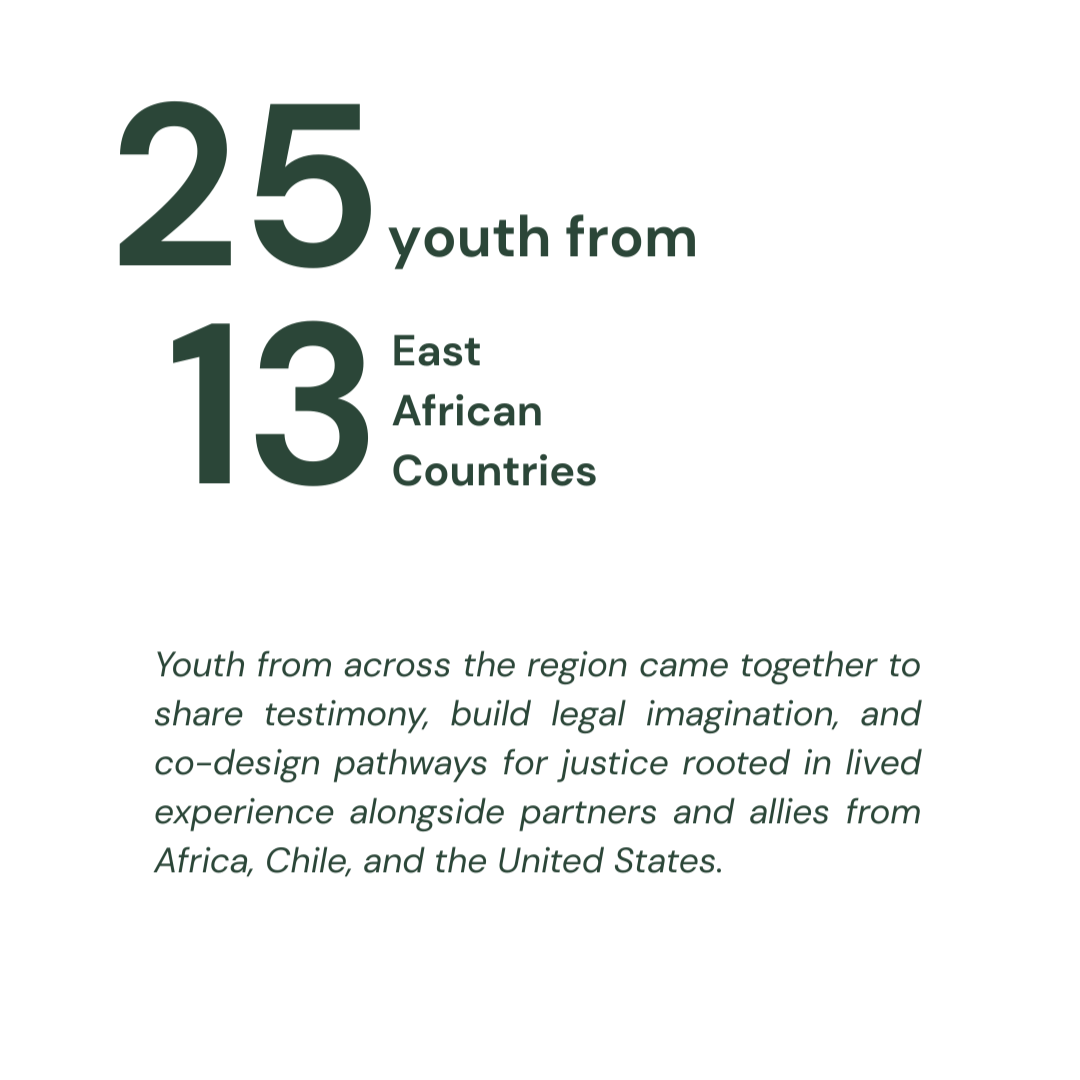

Grounding & Building Understanding
Guiding Principles: Sankofa & Umoja
Day 1 marked the first day of programming and focused on grounding the space, aligning shared values, and building collective understanding. Guided by Sankofa, participants reflected on history and lived experience to better envision just futures, while Umoja emphasized unity across diverse cultural, linguistic, socio-economic, and political contexts. An opening ceremony rooted in movement and prayer set a tone of care and intention, followed by testimonies that anchored the Tribunal in lived reality:
- Tanzania (Maasai): water scarcity and Indigenous knowledge–led solutions, with gendered impacts on women and girls through missed school, exhaustion, and increased early marriages, raising urgent human rights concerns including the right to food (Tanzanian Constitution Article 27).
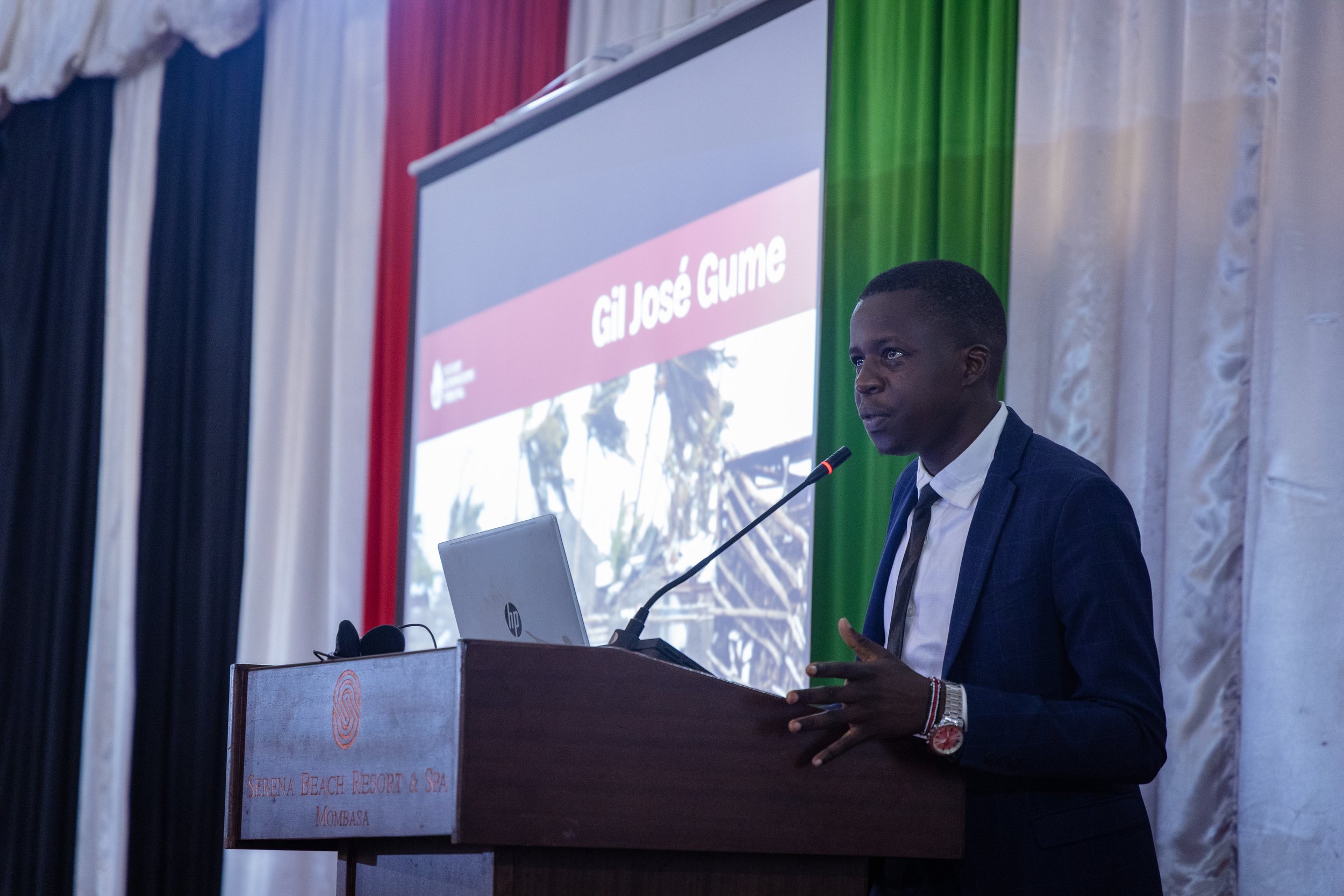
- Mozambique (Beira): Cyclone Idai and systemic neglect that led to cascading rights violations across life, housing, education, health, information, and dignity, including early warning and evacuation gaps, widespread displacement, and disease outbreaks.
- Democratic Republic of the Congo: the intersecting resource extraction and humanitarian crises shaping daily life.

- What grounds you in this moment?
- What violations were most highlighted (right to health, economic rights, displacement, safety)?
- Which violations most directly touch children and future generations?
Documenting Harm, Naming Purpose
Guiding Principles: Nia & Ujima
Day 2 deepened shared understanding of the environmental polycrisis across the region—how it is lived, how it compounds injustice, and how communities respond. Guided by Nia (Purpose) and Ujima (Collective Work & Responsibility), participants centered documentation as a collective act—connecting testimony to rights, accountability, and future-oriented justice. A second round of participant testimonies was followed by small-group workshopping to dive deeper into what was heard and name the most urgent violations.
- Sudan (Darfur): conflict rooted in political marginalization and colonial legacies, intensified by resource scarcity and climate stress—driving displacement and environmental degradation.
- Burundi: disability and gender justice testimony on how disaster response and recovery systems often fail to account for disabled people, deepening exclusion and insecurity during extreme events.
- Uganda (Agago District): cycles of drought and floods destroying crops, collapsing income, and displacing communities—while women and girls bear disproportionate burdens, including hours spent collecting water and heightened food insecurity.

Testimony, Reflection, and the Joy That Sustains Us
Holding truth while holding each other
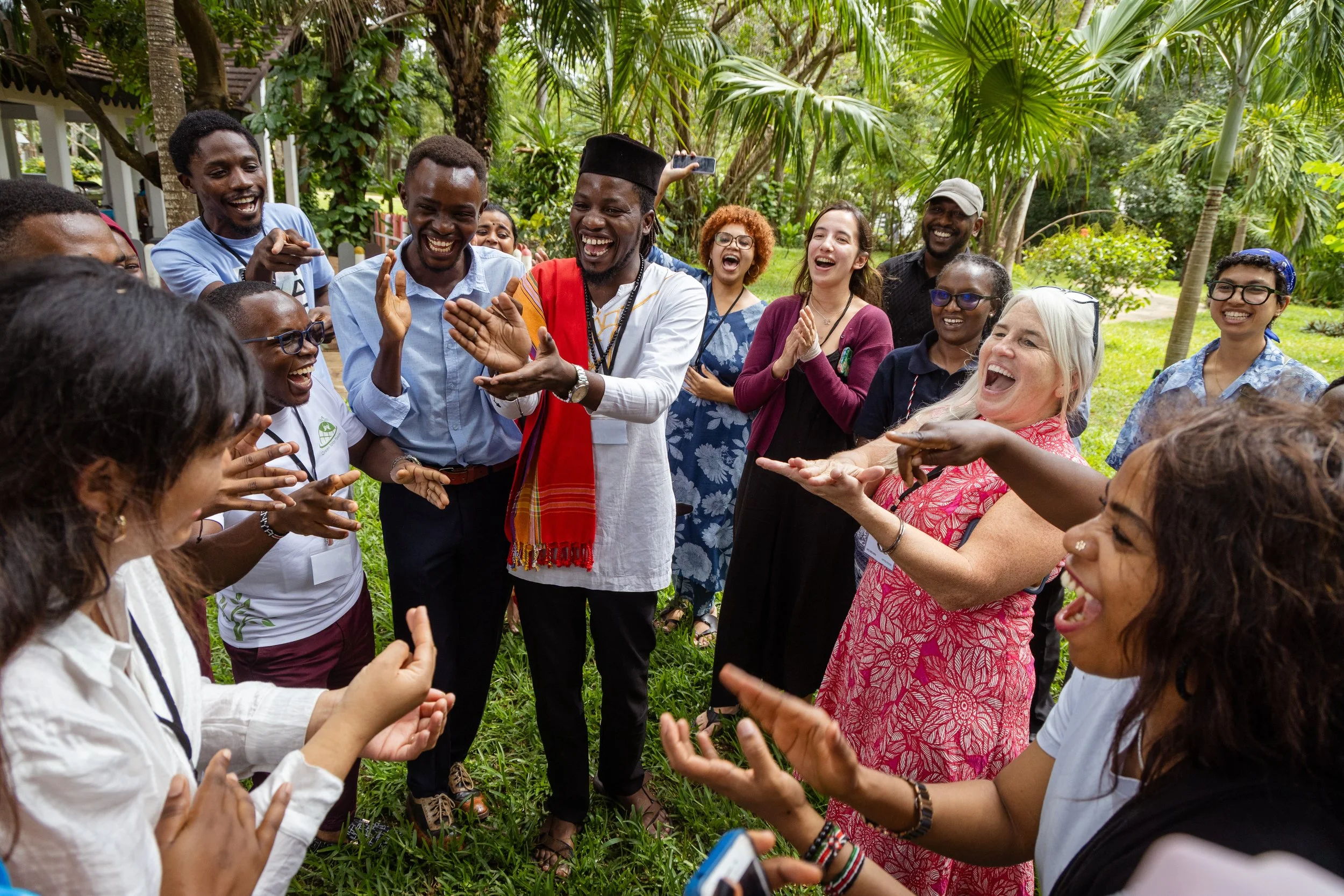
Day 3 continued the rhythm of testimony and collective reflection, deepening shared understanding of harm, resistance, and the realities participants carry from their communities. But Day 3 also made something equally clear: this work cannot be sustained through urgency alone. Rest, care, and joy are not side notes to movement-building, they are part of the strategy. Throughout the day and into the evening, participants built trust through simple, grounding moments—friendly competition, laughter, and collective pause—creating space to exhale and to remember that community is a form of protection. In between sessions, bonding activities helped participants connect beyond their roles as testifiers or experts, strengthening the relational foundation that makes collective action possible long after the Tribunal ends. Feli from our partners Roots led many of the wellbeing and care activities.
- Wellness as a principle: care practices were treated as essential, not optional, to prevent burnout and support participant safety.
- Bonding as infrastructure: games, reflection prompts, and movie nights strengthened solidarity and built the trust needed for difficult conversations.

- What does it mean to be a good ancestor?
- Where do future generations already exist in our everyday lives?
- What must law protect to make dignified futures possible?
Collective Analysis & Declaration Building
Guiding Principles: Kujichagulia & Kuumba
Day 4 marked a clear shift in the Tribunal from listening to collective creation. This was the first day without formal testimonies, as participants moved into intentional, community-led workshopping to begin shaping the East Africa Declaration on the Rights of Future Generations. Guided by self-determination and creativity, the day focused on documenting existing practices already being carried out by communities to protect future generations and exploring how those practices can be recognized, strengthened, and upheld through law. Regional, local, and international thematic experts were introduced to support dialogue across disciplines and contexts, grounding the process in both lived experience and technical insight. Through collective reflection, participants examined ancestry, responsibility, and continuity, surfacing shared understandings of what dignified life requires across time and what legal systems must do to safeguard that future. The workshop created space to name the conditions that must be protected for life to remain livable and dignified, and to articulate what communities need from law beyond recognition: enforceability, resources, and protection from ongoing harm. These conversations laid the ethical and conceptual foundation for a Declaration rooted in community knowledge, collective responsibility, and self-determined futures.

“What will tomorrow ask us today?
When rivers are dry and skies turn gray.
Will it whisper softly or cry in pain—
Why did you let it happen again?”
Collective Commitment & Closing
Guiding Principles: Harambee · Griot · Imani · Ujamaa
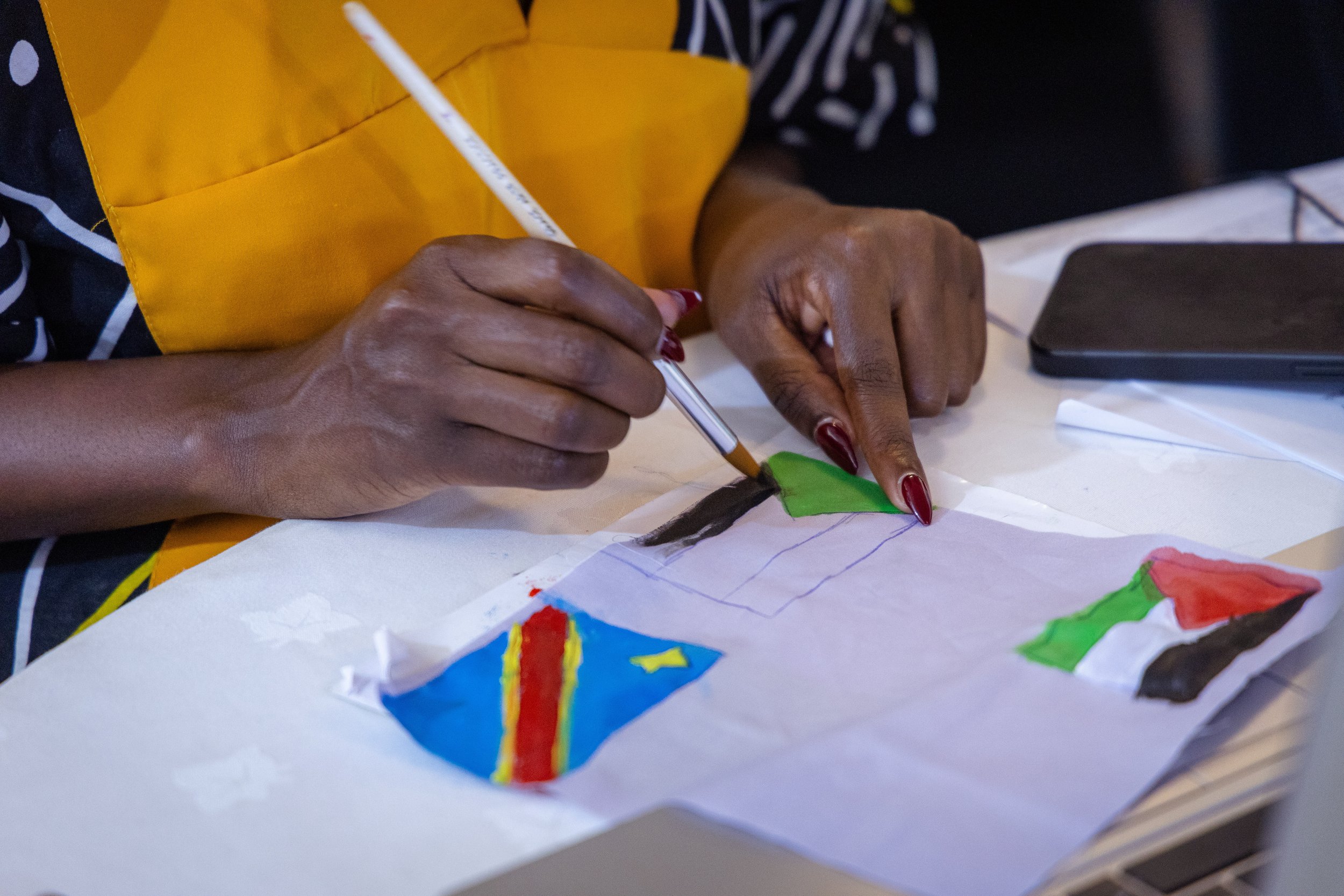
Day 5 brought the Tribunal to its culmination through collective authorship, alignment, and celebration. Participants returned to the draft East Africa Declaration on the Rights of Future Generations with a clear purpose: to ensure the text truthfully reflected their voices, their communities, and the shared consensus built across the week. The day opened with a short weaving exercise to ground the room in connection and continuity, then moved into focused drafting sessions where participants reviewed, clarified, and strengthened key provisions together. Central to the process was a shared commitment to honesty and precision: participants asked whether their communities were accurately represented, where language needed to be sharper or more protective, and how the Declaration could carry lived realities into a form that is legible to law without losing its roots. The drafting work also created space for forward-looking solidarity, naming how participants and their communities can unite around common struggles, deepen cross-border collaboration, and carry this Declaration into movement spaces, advocacy, and community work beyond the Tribunal. The Tribunal closed with collective agreement on the first draft of the Declaration and a powerful spoken word offering, Tumerithi Tuwarithishe, leaving the room with a shared sense of responsibility to future generations.
EAFGT Event Day by Day
Kenya
Mozambique
Tanzania
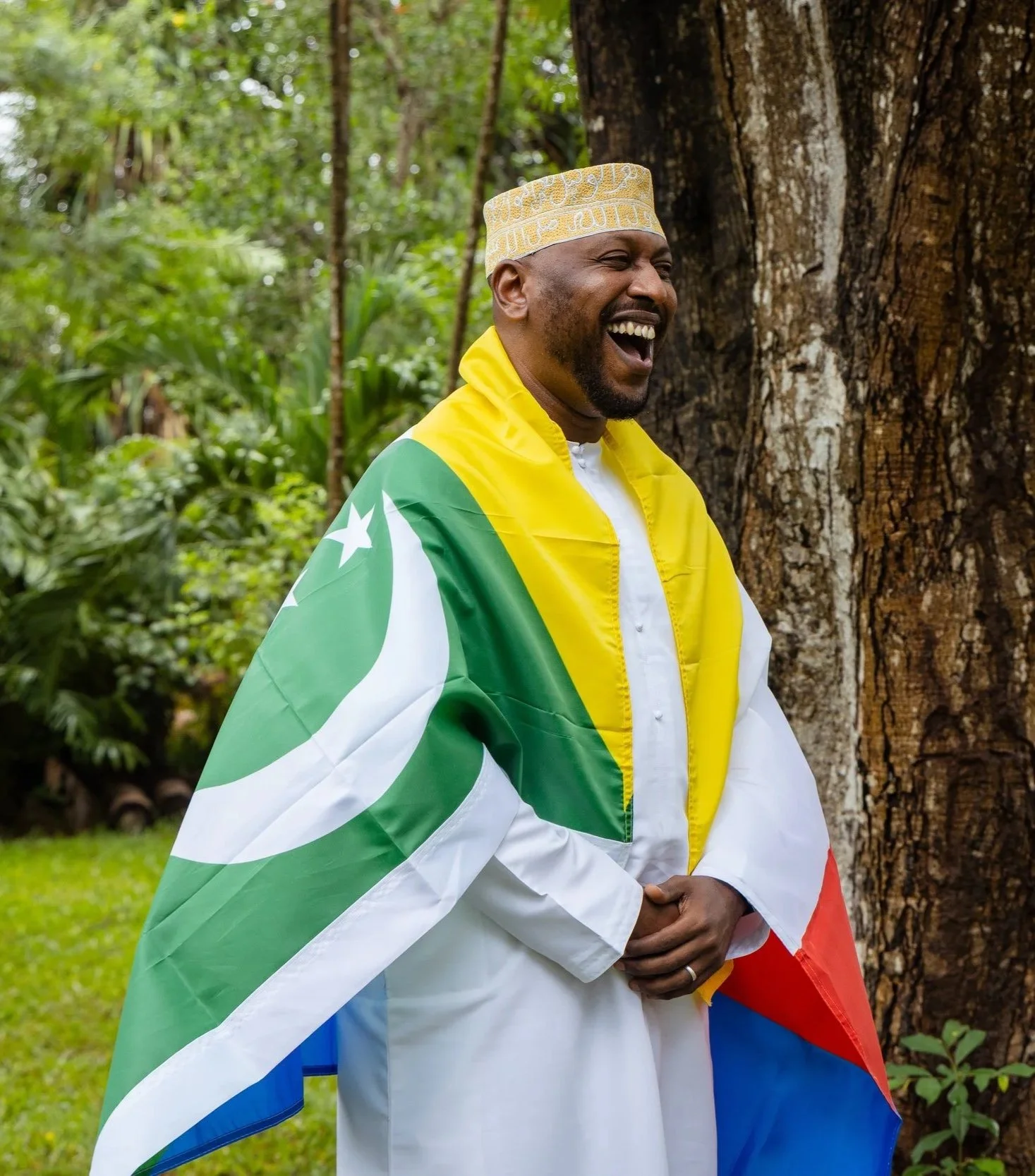
Comoros
Uganda
Democratic Republic of Congo
South Sudan
Republic of Sudan
Ethiopia
Republic of Burundi
Malawi
Madagascar
Kenya Mozambique Tanzania Comoros Uganda Democratic Republic of Congo South Sudan Republic of Sudan Ethiopia Republic of Burundi Malawi Madagascar
Kenya
Mozambique
Tanzania
Comoros
Uganda
Democratic Republic of Congo
South Sudan
Republic of Sudan
Ethiopia
Republic of Burundi
Malawi
Madagascar
Kenya Mozambique Tanzania Comoros Uganda Democratic Republic of Congo South Sudan Republic of Sudan Ethiopia Republic of Burundi Malawi Madagascar

MEET THE TESTIFYING PARTICIPANTS
-
![]()
Litya Sanago
Tanzania
-
![]()
Esther Furaha Baya
Kenya
-
![]()
Abdou Djabaouidine
Mayotte
-
![]()
Atim Edith Labeja
Uganda
-
![]()
Sasa Emmanuel James
South Sudan
-
![]()
Anonymous
Tanzania
-
![]()
Isaac Jimmy
Democratic Republic of Congo
-
![]()
Bertha J. Magomere
Tanzania
-
![]()
Thembo Puruka Johnson
Uganda
-
![]()
Lydia Halidi
Comoros
-
![]()
Yamikani Mlangiza
Malawi
-
![]()
Gil José Gume
Mozambique
-
![]()
Nadia Ininahazwe
Republic of Burundi
-
![]()
Claudia Julie Sumaili
Democratic Republic of Congo
-
![]()
Wathik Chahabane
Comoros
-
![]()
Ilda Elisa António Cerveja
Mozambique
-
![]()
Parfait Mushanganya Nyongolo
Democratic Republic of Congo
-
![]()
Anonymous
Republic of Burundi
-
![]()
Aisha Ali
Kenya
-
![]()
Anonymous
Kenya
-
![]()
Awdallah Hussin Mohammed
Sudan
-
![]()
Bochola Sara Arero
Ethiopia
-
![]()
Brigitte Tolojanahary Rasoatahina
Madagascar
















REGIONAL
FUTURE
GENERATIONS
The East Africa Declaration is the collective outcome of the East Africa Regional Tribunal for Future Generations. Developed through a participatory process grounded in community testimony and collective analysis, the Declaration articulates shared harms, responsibilities, and demands in service of present and future generations. It translates lived experience into a shared political and legal record, carrying regional realities into global spaces.
DECLARATION
“The fact that my testimony was not only heard but also taken into account in the final declaration was incredibly moving for me. It showed that my voice, as a young African woman and climate justice advocate, truly mattered.”
— Participant from the DRC
We Couldn’t Have Done The Tribunal Without
Our Partners
On behalf of the entire FGT team . . . thank you!