Our Mission
𖦹
Our Mission 𖦹

The law governs decisions with consequences that stretch across generations yet those most affected by the future remain largely unprotected.
“What if the future is soft and revolution is so kind that there is no end to us in sight”
Our mission is to make intergenerational justice enforceable by securing rights, building collective power, and expanding what counts as evidence.

Secure Legal Personhood and Rights for Future Generations
Future generations are politically and legally invisible. While their lives will be shaped by today’s decisions, existing legal systems largely recognize only the interests of the present, leaving those yet to come without standing, representation, or enforceable protection.
-
No legal standing in courts or governance processes
No guaranteed representation in decision-making
No ability to claim remedies before harm occurs
Protection depends entirely on the will of present actors
Long-term and cumulative harms are routinely deprioritized
The Future Generations Tribunal exists to change that. Our mission is to advance the legal recognition of future generations as rights-bearing legal persons — not as abstract interests or moral considerations, but as subjects of law whose rights impose real duties and obligations today.
-
Recognition of future generations as rights-bearing subjects of law
Legal standing through appropriate representatives or guardians
Duties placed on States and decision-makers today
Pathways for accountability before harm becomes irreversible
Protection that extends beyond political cycles and short-term interests
A rights-based framework is the foundation of this work. Rights are not symbolic; they create legal duties. When those duties are breached, rights generate enforceable claims. Without legal personhood, future generations cannot meaningfully access justice, remedy, or protection — even when harm is foreseeable, ongoing, and irreversible.
-
Right to exist — inheriting a viable planet with a stable climate
Right to a healthy environment — clean air, water, land, and biodiversity
Right to sustainable use of resources — protection from depletion and extraction
Right to cultural and intellectual heritage — safeguarding knowledge, identity, and memory
Right to intergenerational equity — fair distribution of risks, benefits, and burdens
Right to representation in decision-making — mechanisms that account for future impacts

Turn Lived Experience into Collective Power and Legal Action
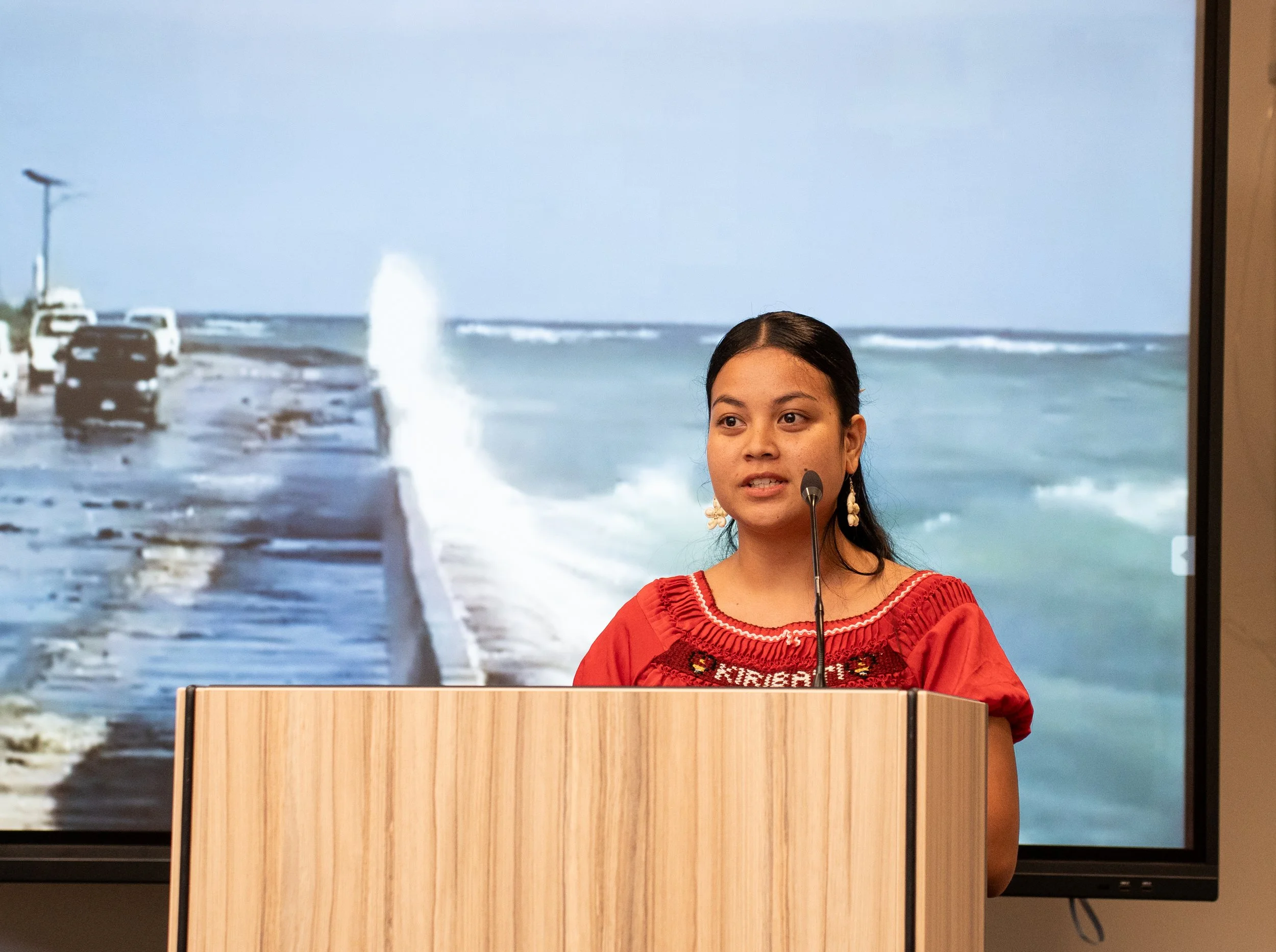
Lived experience is not supplementary to justice, it is foundational. The Future Generations Tribunal places youth and frontline communities at the center of its work because they are not only those most impacted by the climate crisis, but also essential stewards of intergenerational justice. Communities living with climate, ecological, and social harm hold critical knowledge about how systems fail, where protection breaks down, and what justice must look like in practice.
-
Youth and frontline communities are both present rights-holders and stewards of future generations
Lived experience informs how rights, duties, and obligations are defined in practice
Testimony documents foreseeable, cumulative, and intergenerational harm
When gathered through participatory processes, lived experience functions as valid evidence
Community-led advocacy strengthens and future-proofs existing human rights frameworks
The Future Generations Tribunal transforms lived experience into collective power by recognizing testimony as valid evidence and positioning communities as active agents in shaping rights, remedies, and legal pathways. We do not extract stories; we build shared processes where knowledge moves, accumulates, and strengthens across regions and generations.
-
Regional tribunals surface shared lived realities across different geographies and contexts
Similar patterns of harm, neglect, and systemic failure become visible across borders
Community knowledge is connected with legal, scientific, and movement-based expertise
Organizations, advocates, and knowledge-holders are introduced and linked across regions
Regional findings contribute to a growing global body of evidence
Global insights strengthen future regional action, strategy, and legal framing
Through a cyclical, relational model, regional tribunals feed into a growing global body of evidence while global findings return to strengthen future regional action. This creates a justice system that learns, adapts, and mobilizes turning testimony into legal action, movement strategy, and lasting accountability.
-
Ground & Build Relationships
Regional partner mapping, trust-building, and contextual legal, political, and cultural researchLearn & Define Needs for Justice
Shared education on rights, climate impacts, and legal pathways; collective framing of justice needsConvene Regional Tribunals
Youth and community testimony, expert cross-analysis, and collective sense-makingCreate & Preserve Evidence
Testimony recognized as valid evidence and archived in the FGT database alongside legal and scientific analysisTranslate into Action
Outcomes transformed into declarations, reports, legal submissions, and movement-ready strategiesReturn & Reinforce
Findings shared back with communities, informing next steps and strengthening future regional and global action
Build Living Archives of Collective Knowledge and Evidence
Justice systems often fail communities not because harm cannot be proven, but because the law recognizes only a narrow and exclusionary definition of evidence. Courts regularly dismiss claims due to a lack of standing, documentation, or admissible proof even when loss, displacement, cultural erasure, and ecological destruction are undeniable.
-
Legal systems often rely on narrow evidentiary standards that privilege written records, formal data, and expert testimony
Harms that are cumulative, slow-onset, or intergenerational are difficult to capture within existing legal timelines and doctrines
Standing requirements frequently limit who can bring claims, even when future or collective harm is foreseeable
Cultural loss, ecological degradation, and non-economic harm are inconsistently recognized or undervalued in legal remedies
When lived experience and community knowledge are excluded, proof thresholds become barriers to justice rather than tools for it
The Future Generations Tribunal exists to reverse that logic. We build living archives that recognize community knowledge, memory, and lived experience as valid evidence and not in opposition to law, but as a necessary expansion of it. These archives preserve what is often erased: oral histories, cultural loss, intergenerational harm, ecological knowledge, and the ways communities understand justice long before it is named by institutions.
-
Evidence that grows, evolves, and carries forward across time
Testimony preserved beyond a single hearing or legal moment
Community knowledge documented without extraction or erasure
Archives designed to inform legal action, advocacy, and memory
Knowledge held collectively, not owned or controlled by institutions
While centering Indigenous legal traditions, youth knowledge, and frontline experience, our archives are intentionally plural and participatory. They hold testimony, art, song, movement, history, and data together — ensuring that evidence reflects the full reality of harm and resilience, and that justice is informed by those who have carried its costs across generations.
-
Oral testimony and storytelling
Indigenous legal traditions and ecological knowledge
Art, song, dance, and cultural expression
Histories of displacement, loss, and resistance
Scientific data and legal analysis held alongside lived experience